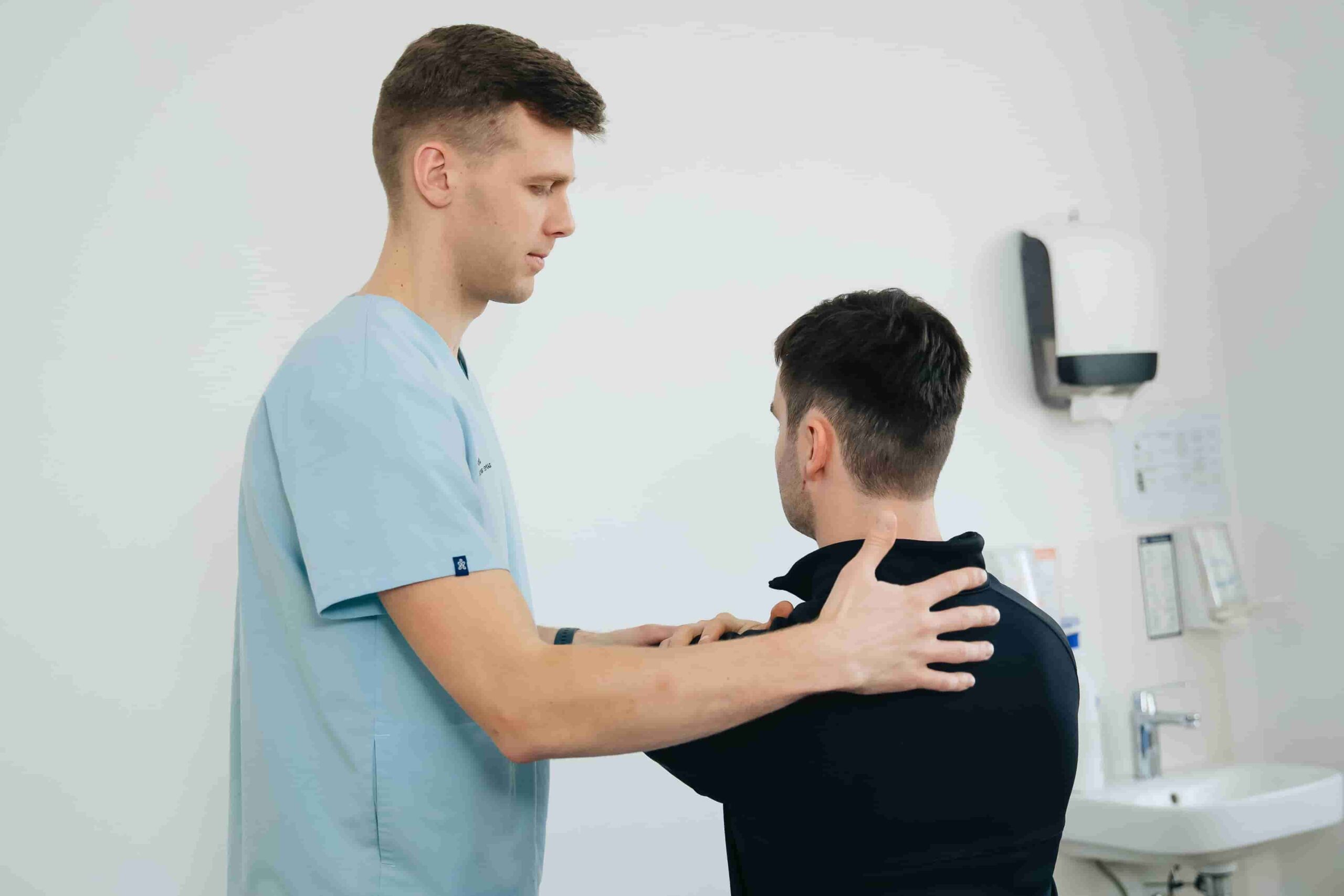

The best physiotherapy exercises for shoulder pain recovery usually include pendulum swings, cross-body stretches, wall slides, scapular squeezes, and rotator cuff strengthening. These exercises help improve mobility, reduce stiffness, and rebuild shoulder stability so you can return to daily tasks with less pain.
Why Shoulder Recovery Needs The Right Exercises
Shoulder pain often comes from stiffness, poor posture, overuse, or an injury to the rotator cuff. If you only rest the shoulder, it may stay weak and tight for longer than necessary. The right exercise plan helps restore movement while protecting the joint from further strain.
A physiotherapist will usually choose exercises based on whether your pain is from inflammation, tight muscles, limited range of motion, or weakness. That is important because the wrong exercise can make symptoms worse.
Gentle Mobility Exercises
Early recovery usually starts with low-load mobility work. These exercises help the shoulder move again without adding too much stress.
Common options include:
- Pendulum swings, which gently loosen the joint.
- Cross-body shoulder stretches help with tightness in the back of the shoulder.
- Wall slides or wall angles, which improve shoulder motion and posture.
- Doorway stretches, which open the chest and reduce rounded-shoulder tension.
These movements are often a good starting point for people with frozen shoulder, tendon irritation, or general stiffness.
Scapular Strengthening Exercises
The shoulder does not work alone. The shoulder blade muscles, also called the scapular muscles, need to be strong and coordinated to support recovery. When these muscles are weak, the shoulder joint can feel unstable or painful.
Helpful exercises may include:
- Scapular squeezes.
- Shoulder blade retractions.
- Rows with light resistance bands.
- Wall push-ups.
- Prone T or Y lifts, if appropriate.
These exercises help improve posture and create a stronger base for the shoulder joint.
Rotator Cuff Strengthening
The rotator cuff is a group of muscles that stabilizes the shoulder and helps with lifting, reaching, and rotating the arm. Strengthening these muscles is a key part of long-term recovery.
A physiotherapist may recommend:
- External rotation with a resistance band.
- Internal rotation with a resistance band.
- Isometric shoulder holds.
- Side-lying external rotation.
- Light arm raises at controlled angles.
These exercises should be done with proper form and without sharp pain. Slow progress is usually better than pushing too hard too soon.
Functional Shoulder Rehab
Once pain and stiffness begin to improve, the focus often shifts to function. That means exercises that help you use your shoulder in real life again. For example, a worker may need overhead reaching, while an athlete may need better throwing or lifting control.
Functional rehab may include:
- Overhead reaching drills.
- Light carrying exercises.
- Controlled lifting motions.
- Sport-specific movement practice.
- Posture and movement retraining.
This stage helps bridge the gap between clinic exercises and normal activity.
How To Know If An Exercise Is Right
A good shoulder exercise should feel challenging but manageable. Mild stretching or muscle fatigue is normal, but sharp pain, pinching, or increasing pain afterward is a sign to stop and reassess.
It is also important to progress gradually. Shoulder recovery often takes time, especially if the pain has been present for weeks or months. A physiotherapist can help you choose the right starting point and move forward safely.
Why Physiotherapy Helps Shoulder Pain
Physiotherapy works well for shoulder pain because it treats the cause, not just the symptoms. It helps restore motion, rebuild strength, and improve how the shoulder moves during daily activities. That can reduce flare-ups and make recovery more complete.
For many people, the biggest benefit is learning how to move the shoulder confidently again. That can be just as important as pain relief.
Final Thoughts
The top physiotherapy exercises for shoulder pain recovery usually include mobility work, scapular strengthening, and rotator cuff exercises. The best plan is one that matches your specific injury and helps you rebuild function step by step.
Start Your Recovery With Easy Allied Health
If shoulder pain is limiting your movement, Easy Allied Health can help you find the right rehab plan.
Visit Easy Allied Health at 3025 Lougheed Hwy #430, Coquitlam, BC V3B 6S2
Phone: (604) 332-6792
Email: info@easyalliedhealth.ca
Book your appointment today and take the first step toward pain-free living.