
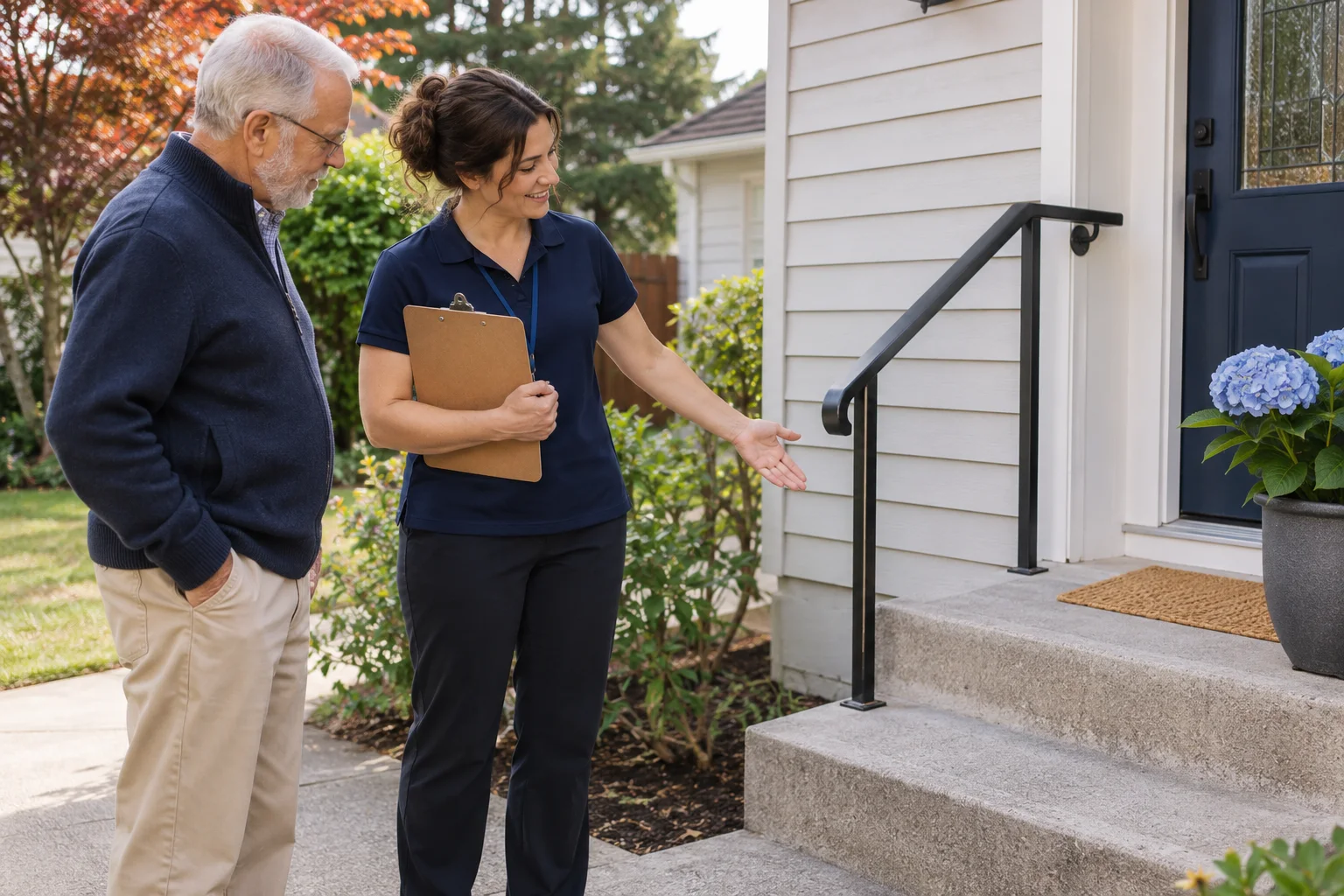
Getting through the front door can involve more than one step. A person may need to manage a pathway, carry a bag, unlock a door and use stairs before reaching a place to sit. An occupational therapy home assessment can explore how those everyday tasks fit the person, their abilities and the environment.
Preparing useful information does not mean changing the home before the appointment. Start with the activities that are difficult and ask what the occupational therapist needs to understand before visiting.
Describe the route you actually use
Explain where you usually enter, what you carry and whether the route changes in poor weather. Mention doors, steps, shared hallways and other features that affect access. If you use a different entrance from the one visitors normally see, let the therapist know.
Describe what makes the task difficult. It may be managing a lock, reaching a handle, navigating a threshold or keeping a hand free. You do not need to choose equipment or propose a structural alteration before the assessment.
If an entrance or staircase feels unsafe, do not attempt it simply to demonstrate the problem. Discuss how the therapist can assess the concern without creating an unnecessary risk.
Bring together current information
Have relevant recommendations, mobility-aid information and recent changes in function available. Explain who is currently helping and what assistance they provide. Keep the person receiving care involved in the discussion as much as they wish and are able.
If the home is rented or part of a managed building, identify who would need to approve changes. A clinical recommendation and permission to modify a property are separate questions. An assessment does not itself authorise construction or establish that a particular installation is suitable.
Explain the tasks around the stairs
Using stairs may be connected to laundry, a bedroom or leaving for an appointment. Tell the therapist what the stairs allow you to do, rather than describing the staircase in isolation. Mention whether the difficulty changes when you carry something or need to answer the door.
The therapist can ask how these tasks fit your routine and what alternatives may be worth discussing. There is no single product or arrangement that is right for every person or home. Avoid buying equipment solely because a similar home uses it.
Agree on who will be present
Ask whether a family member, support worker or building representative would be helpful. Confirm the person’s consent before sharing personal health information. A supporter can help explain routines without speaking over the person whose goals the assessment should address.
For a building with entry controls, provide the booking team with the necessary access instructions. Explain parking or visitor arrangements and ask what information should be sent privately before the visit.
Leave with responsibilities you understand
After the assessment, ask what has been recommended, which decisions remain open and who should take the next step. Clarify whether additional measurements, permissions or professional input are needed. Keep the current recommendations together so different helpers are working from the same information.
Read about occupational therapy at Easy Allied Health. Call 604-305-0037 or contact the team to ask about an appropriate home assessment and service availability.