
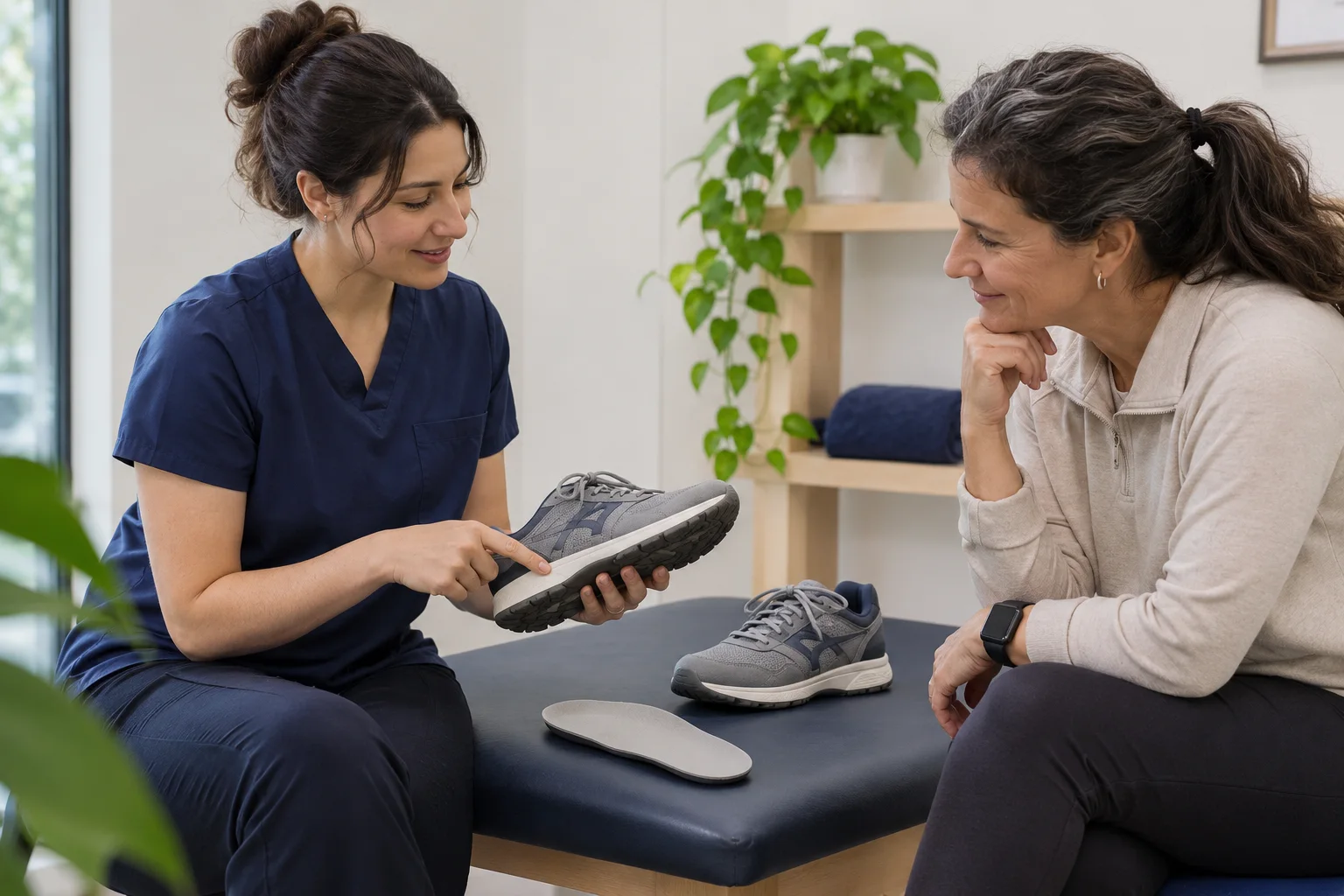
Preparing for a custom orthotics assessment starts with the activities and footwear that matter in your day. Explain where discomfort occurs, when you notice it and which shoes you use for work, exercise or ordinary errands. You do not need to decide in advance that a custom device is the right answer.
Orthotics are inserts used for particular foot-related needs. HealthLink BC’s overview notes that different devices serve different problems and that coverage is not automatic. An assessment should help clarify the options for your circumstances.
Ask which shoes to bring
Contact the clinic before the visit and ask what footwear would be useful. The shoes you wear most often may tell a different story from a rarely used pair. If you need specific work footwear, mention that requirement when booking.
Bring existing orthotics or inserts if the clinic requests them. Explain how long you have used them, whether they fit your current shoes and what you noticed while wearing them. Do not assume a worn or uncomfortable insert should simply be copied into a new device.
The practitioner may need to discuss footwear as part of the assessment. A device and the shoe it is used in need to be considered together, rather than treating a custom insert as suitable for every shoe.
Describe symptoms and daily demands
Explain the location and pattern of your discomfort without trying to assign a diagnosis. Mention activities that bring on the concern and any meaningful recent change. Include relevant injuries, surgeries and recommendations from other treating professionals.
If your work involves prolonged standing, particular surfaces or required safety shoes, say so. If the main difficulty is a short daily walk or a specific activity, describe that instead. The assessment should connect to the tasks you want to manage.
Ask how the recommendation is made
Request a plain-language explanation of the findings and what the proposed device is intended to address. Ask what alternatives may be appropriate and whether additional assessment is needed before deciding.
A custom product is not automatically necessary because it is described as more specialised. You should understand the reason for the recommendation and its limitations. Avoid treating a scan, impression or product description as a guarantee that pain will resolve.
Separate the assessment fee from device costs
Ask for the current assessment charge and the cost of any recommended device. Confirm what is included in fitting, follow-up and adjustments, and what would be charged separately. Use the current pricing page as a starting point, then verify the actual appointment and product quote.
If you plan to claim through insurance, ask your insurer which practitioner, prescription and receipt requirements apply. Keep those requirements separate from the clinical decision about what is appropriate. A provider’s receipt does not guarantee that your plan will reimburse the purchase.
Understand the fitting and review plan
Before ordering, ask how fitting will be checked and what to do if a device is uncomfortable or does not fit the intended footwear. Follow the individual instructions you receive rather than adopting an online wear schedule.
Read about custom orthotics at Easy Allied Health. Call 604-305-0037 or contact the team to confirm assessment availability and what to bring.